SolutionsIrregular income
Self-employed
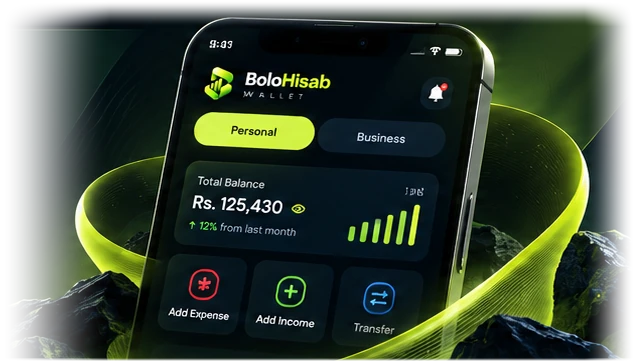
Self-employed work often has no salary date. The useful habit is a record of what came in and what went out, kept in the right workspace. BoloHisab will not predict next month’s income.
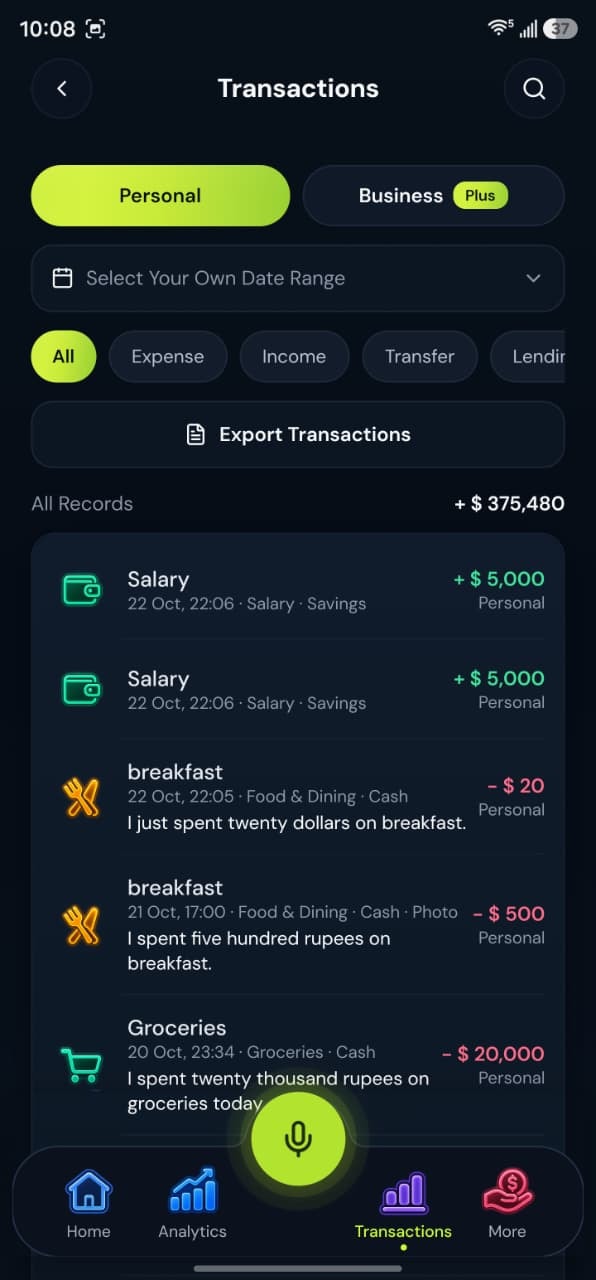
- Income on the dayEach payment is its own entry
- Goals for slow monthsA named target with a date
Why it fits
Built around the records you already keep
Record income on the days it arrives, and keep a budget for the months when it does not.
Income entries, not a forecast
Each payment is an income transaction. The home total reflects what you saved, not an average the app invented.
A personal budget beside the work
If you chose Both, a household budget can sit next to a business budget without sharing a limit.
Goals for uneven months
A savings goal is a named target. It does not move money, but it keeps the target visible next to the month’s records.
Get set up
A way to use what already exists
No extra module to switch on. The same app, used in the order that suits these records.
- 1
Speak short entries
A short sentence with the amount is easier to review than a long description of the job.
- 2
Separate a reimbursement
If a client pays you back for a cost, record that as the right income or refund type instead of hiding it inside salary.
- 3
Export at tax time only if you need the file
The export is a copy of your entries. It is not a tax return. CSV works on every plan; PDF is on Plus and Pro.
Good to know
Nothing here calculates tax you owe. Keep the records, and use a tax adviser if you need one.
How is this different from the freelancer page?
Freelancers usually have client payments and job costs. Self-employed work may be a trade with irregular daily income and fewer named clients. The app features are the same. The records you keep are different.